West Highland Way
In 2019, Page & Park Architects transformed the starting point of Scotland's iconic West Highland Way in Milngavie, creating a striking new landmark that offers walkers a more meaningful and memorable beginning to the 96-mile route. The project replaces a previously uninspiring setting with an engaging, sculptural wayfinding intervention crafted from Corten steel and Douglas fir timber.
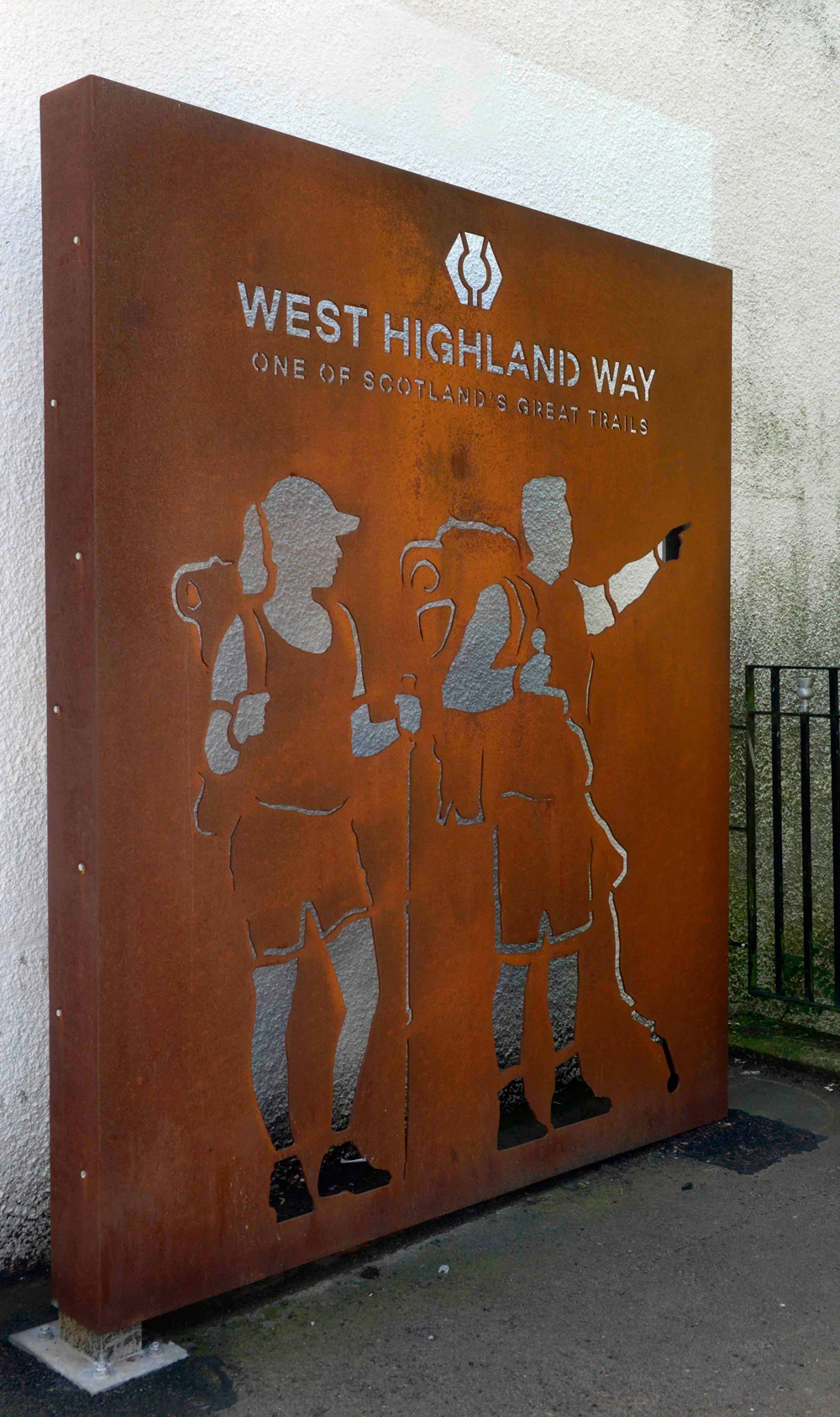
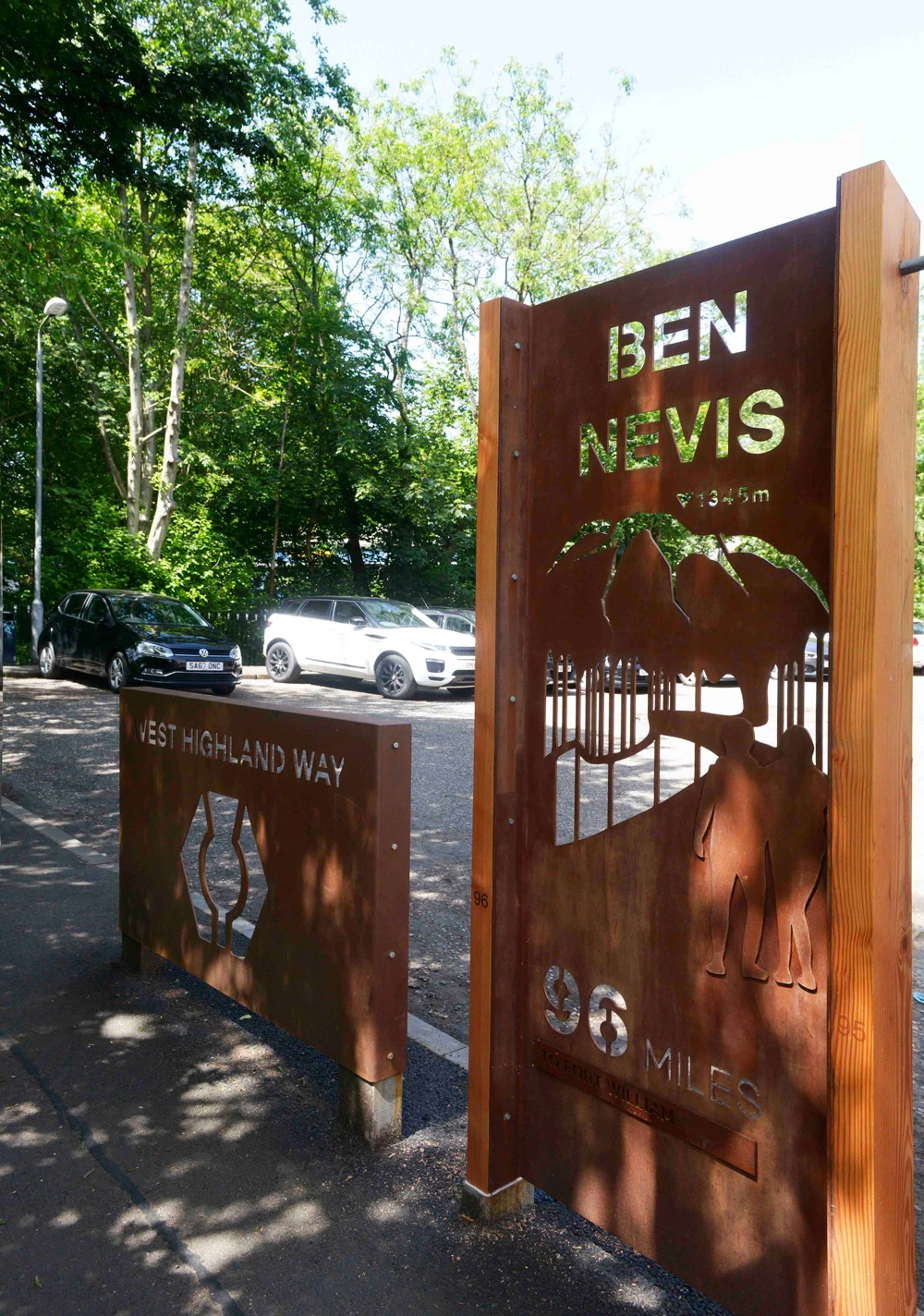
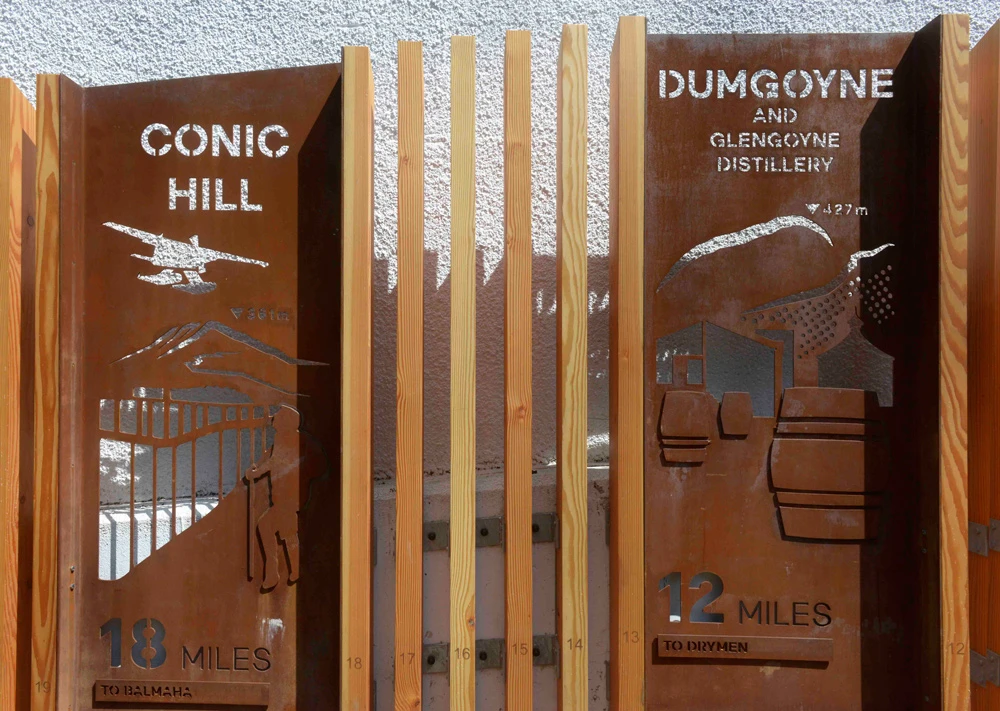
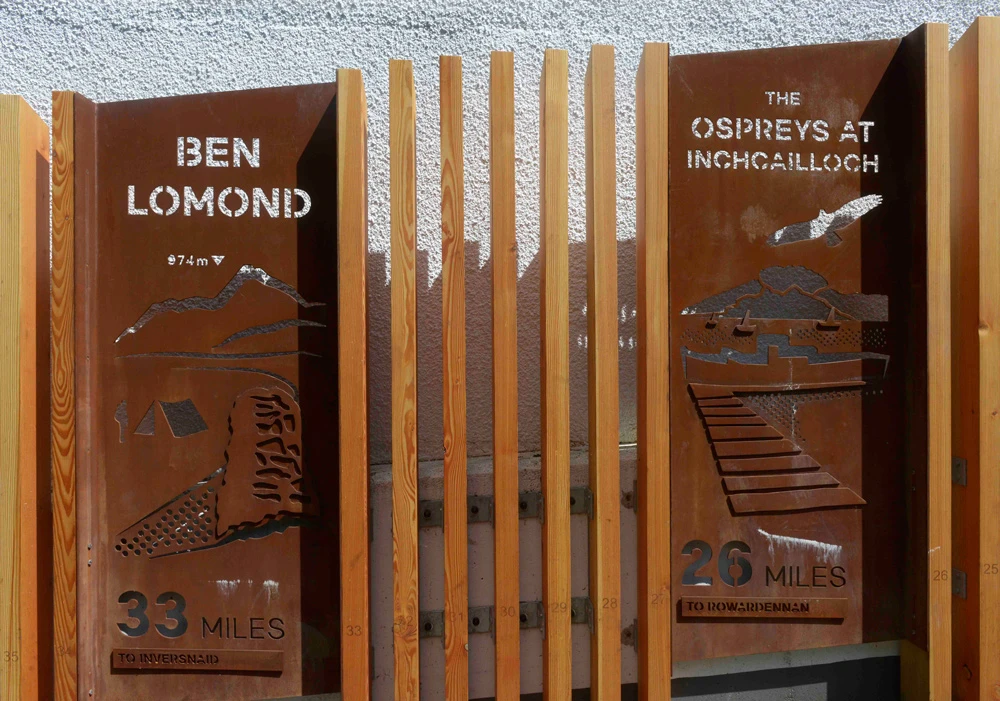
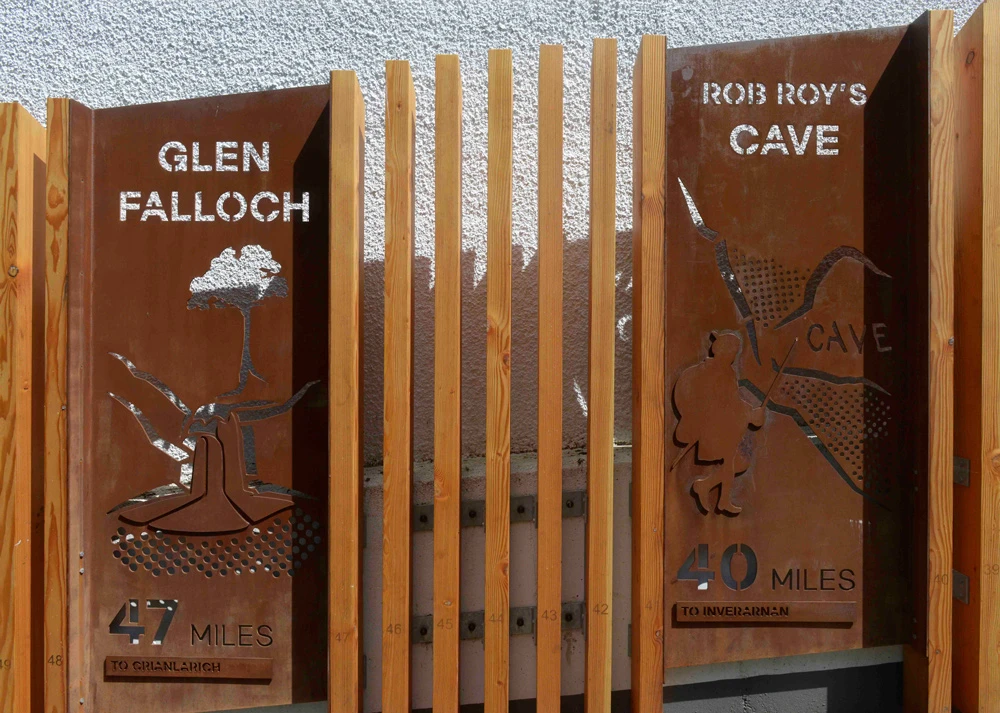
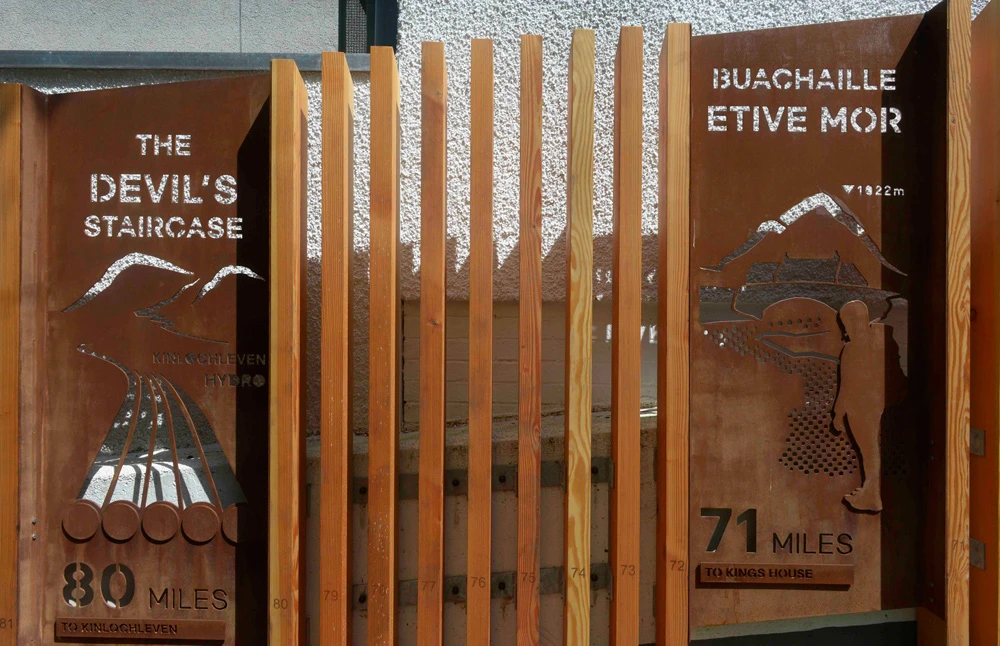
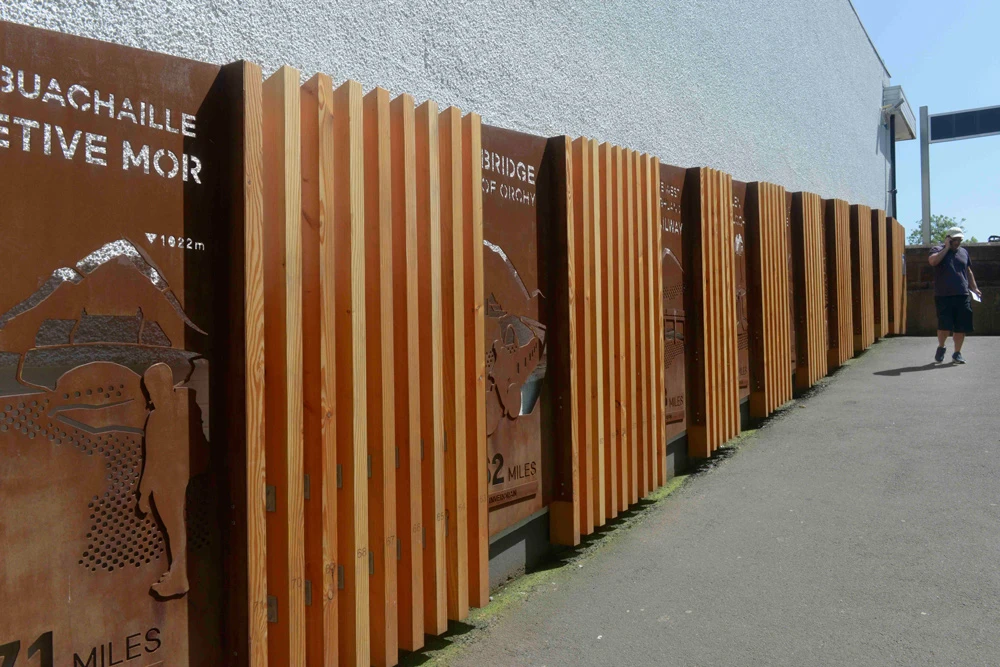
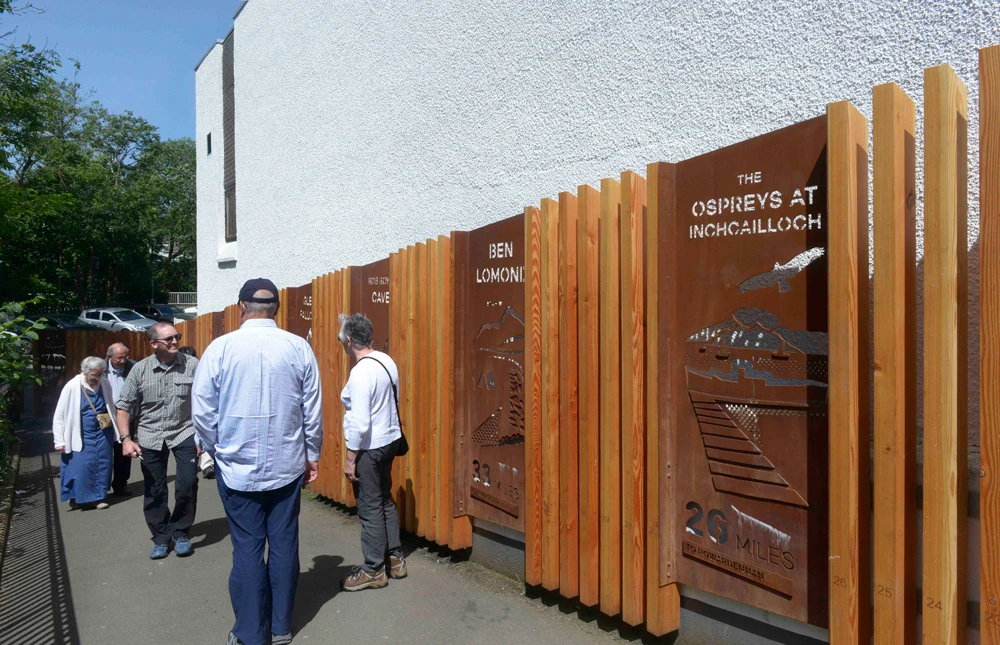
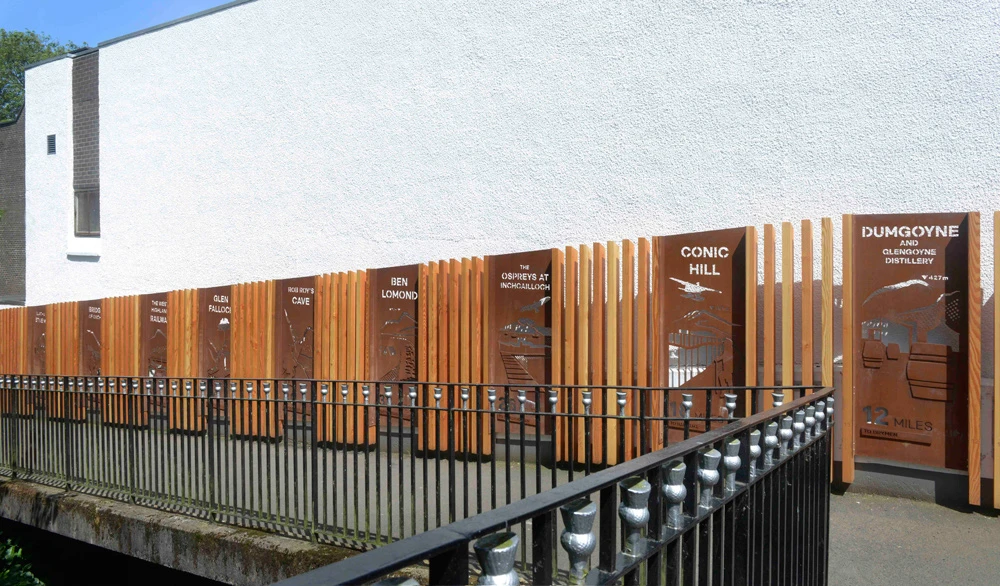
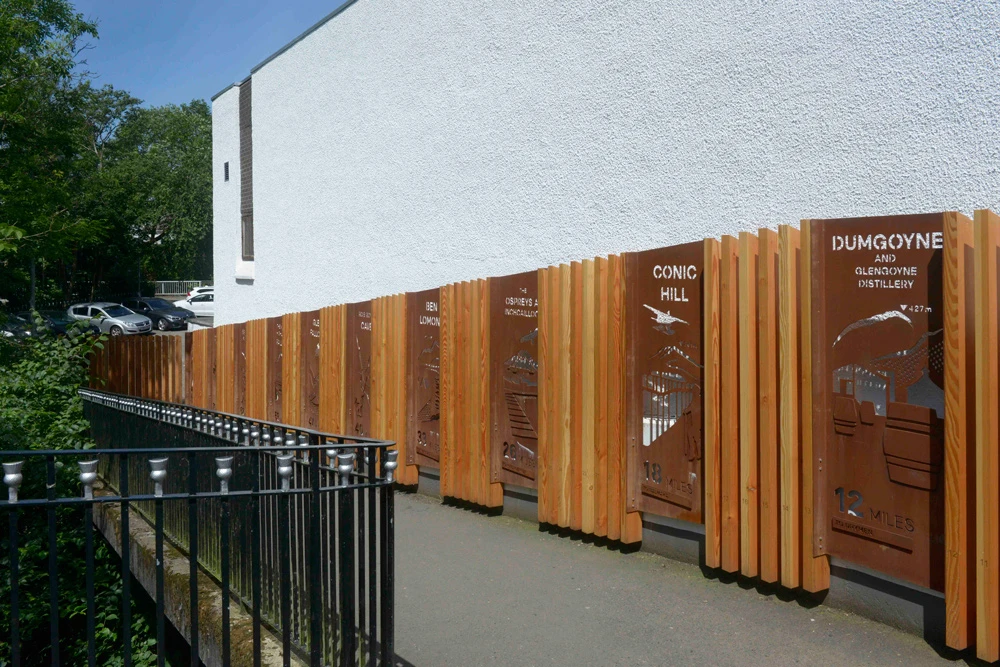
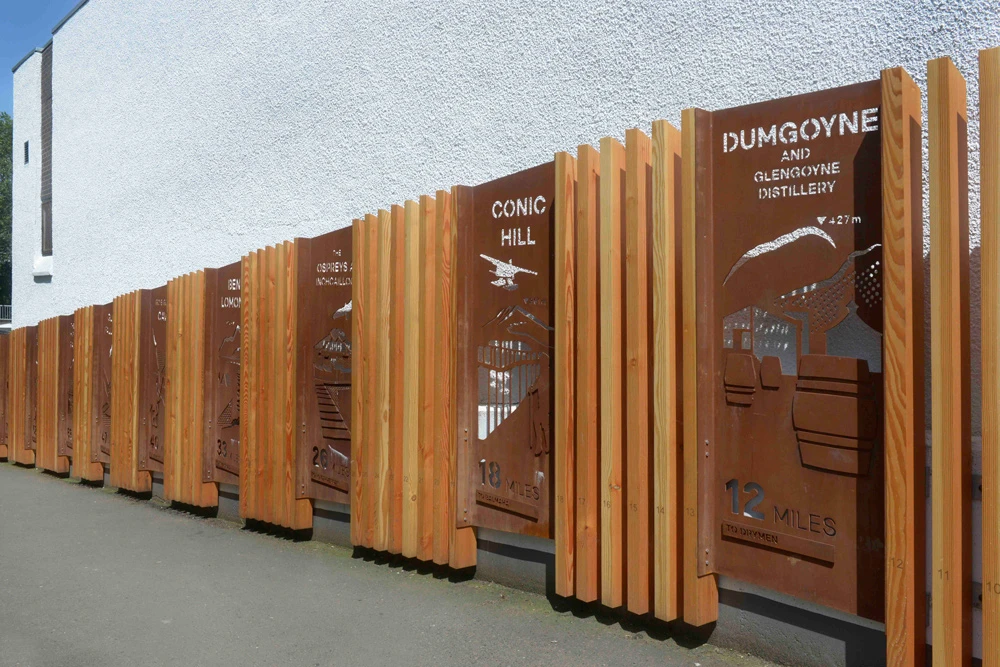
The centrepiece of the installation is a 25-metre-long Corten steel artwork, punctuated by 96 individually carved timber posts — one for each mile of the trail to Fort William. These grouped timber markers represent different sections of the walk, while the large Corten panels are routered with layered illustrations and milestones that offer glimpses of the landscapes and vistas that lie ahead.
Located at a key point where the route crosses the Allander Water, the installation screens a blank gable wall and guides walkers toward the river, enhancing both the legibility and visual quality of the site. Designed to provide photo opportunities, orientation, and a sense of anticipation, the piece has become a celebrated feature for the thousands of walkers who pass through each year.
The centrepiece of the installation is a 25-metre-long Corten steel artwork, punctuated by 96 individually carved timber posts — one for each mile of the trail to Fort William. These grouped timber markers represent different sections of the walk, while the large Corten panels are routered with layered illustrations and milestones that offer glimpses of the landscapes and vistas that lie ahead.
Located at a key point where the route crosses the Allander Water, the installation screens a blank gable wall and guides walkers toward the river, enhancing both the legibility and visual quality of the site. Designed to provide photo opportunities, orientation, and a sense of anticipation, the piece has become a celebrated feature for the thousands of walkers who pass through each year.